An 11-Day Catholic Pilgrimage to San Giovanni Rotondo, Loreto, Lanciano & Rome
The tomb of St. Padre Pio, the Holy House at Loreto, the Eucharistic miracle at Lanciano and the cave of St. Michael at Monte Sant’Angelo — shrines most Italy itineraries never reach.
By coach throughout, Assisi to Puglia and back to Rome. Three nights in Assisi, two in San Giovanni Rotondo, four in Rome.
Rome · Assisi · Loreto · Cascia · Lanciano · San Giovanni Rotondo · Monte Sant’Angelo · Montecassino · Rome
Loreto is a day trip from Assisi. Cascia and Lanciano are visited en route south, and Montecassino en route back — no detours.
Fourteen shrines in eleven days, from the Holy House at Loreto to the tomb of St. Padre Pio, with Mass in the shrine itself every day.
The little stone chapel St. Francis repaired and where he died, now enclosed inside a great basilica in the valley below Assisi. The rose garden and the cave he withdrew to are a few steps away.
The incorrupt body of the foundress of the Poor Clares, and the San Damiano crucifix that spoke to St. Francis, both in the same church.
The Giotto cycle above, the tomb below. Mass at the tomb of St. Francis on day three.
The church named for the day Francis renounced his inheritance in the square outside now holds the body of the first millennial saint, in jeans and trainers, visible through glass.
Three stone walls, venerated since the thirteenth century as the house of Nazareth where Mary received the angel, standing inside a marble screen carved by Bramante and Sansovino. One of the great Marian shrines of Europe. Mass in the Holy House.
St. Rita — abused wife, widow, mother, then Augustinian nun, and the patron saint of impossible causes. Her incorrupt body lies in a silver and glass shrine in a basilica in the Umbrian mountains. Mass here.
The oldest recorded Eucharistic miracle in the Church, dated by tradition to the eighth century, when the host and wine at Mass are said to have become flesh and blood. Both are still displayed above the altar and were examined under microscope in the twentieth century.
The heart of the route. His body rests here, and a short walk away are the older friary church and the confessional where he heard penitents for half a century, sometimes sixteen hours a day. Mass at the tomb.
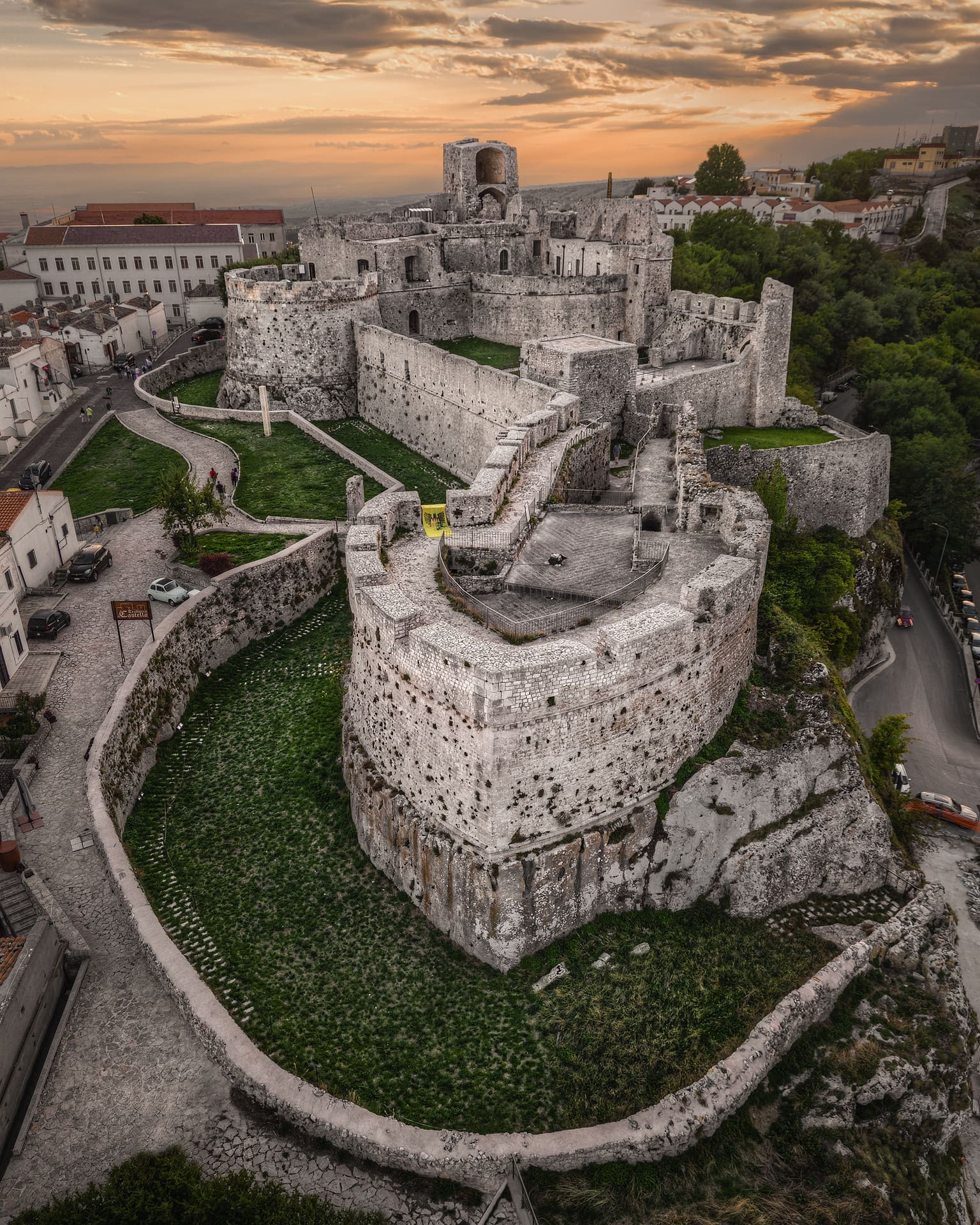
A cave in the rock of the Gargano where St. Michael the Archangel is said to have appeared in the fifth century — the oldest shrine to the archangel in western Europe, and a stop for pilgrims on their way to Jerusalem for a thousand years.
Where St. Benedict wrote the Rule that has ordered monastic prayer for fifteen centuries. Flattened by Allied bombing in 1944 and rebuilt stone for stone. His tomb is under the high altar. Mass on the mountain.
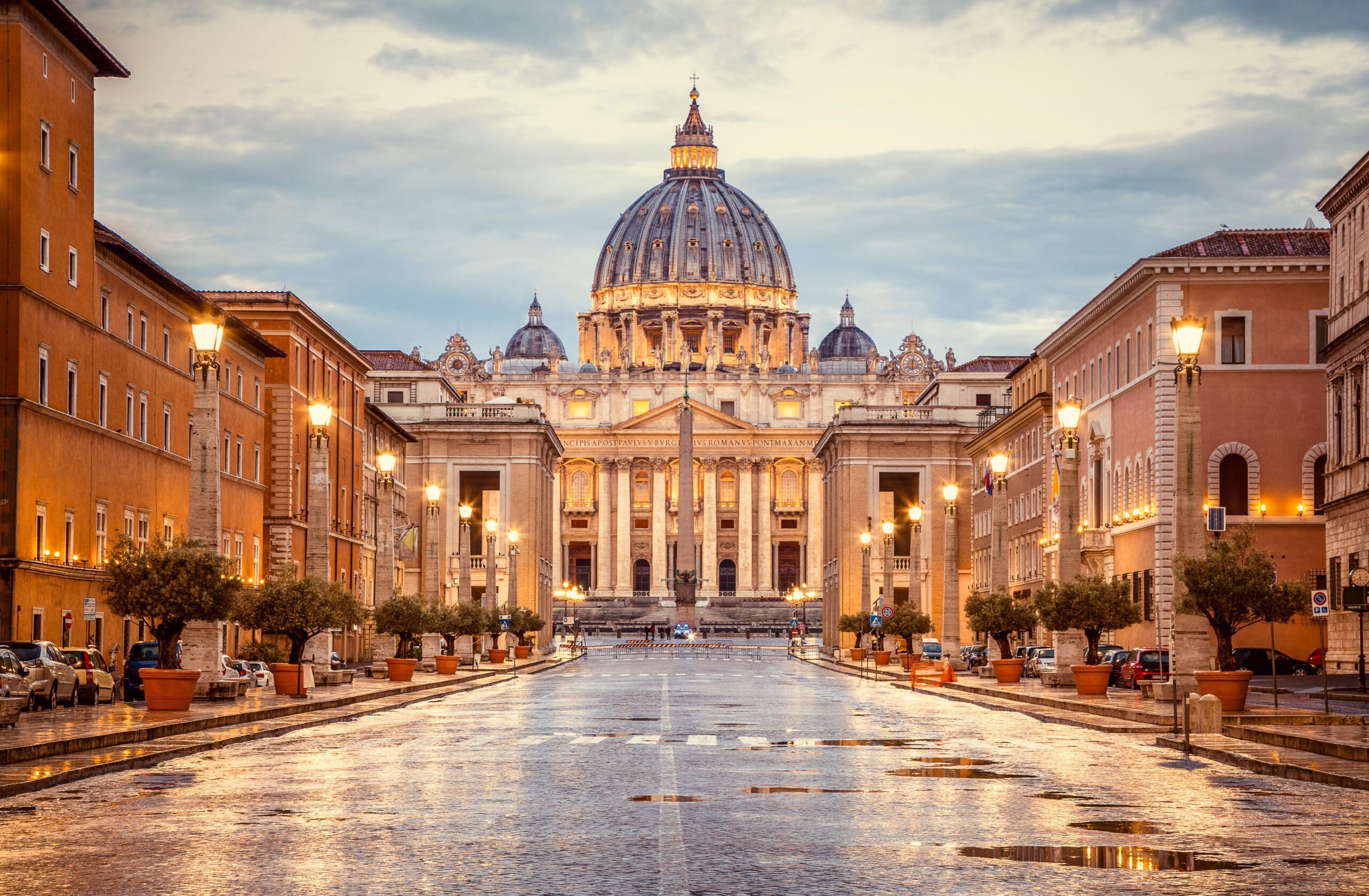
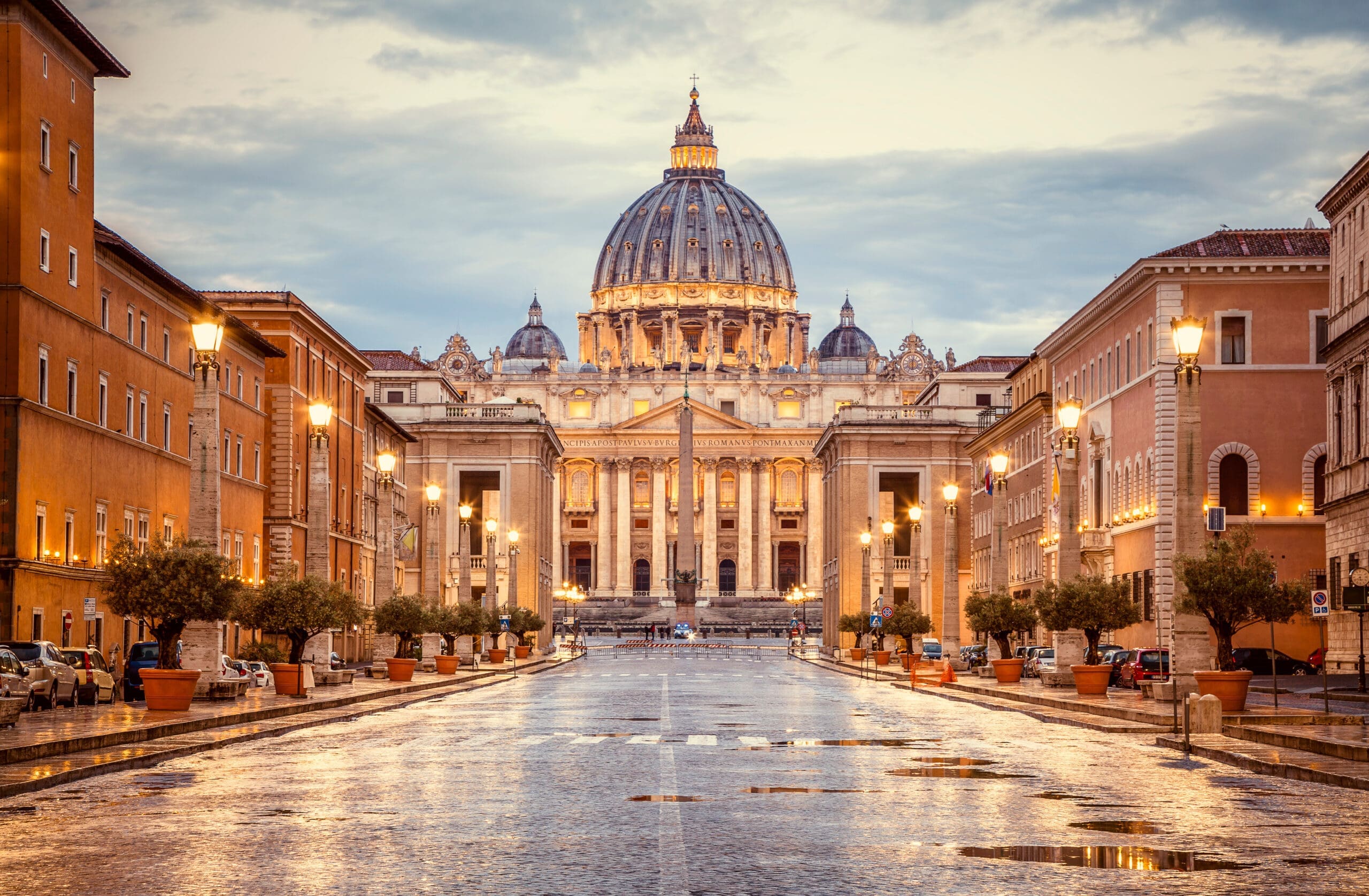
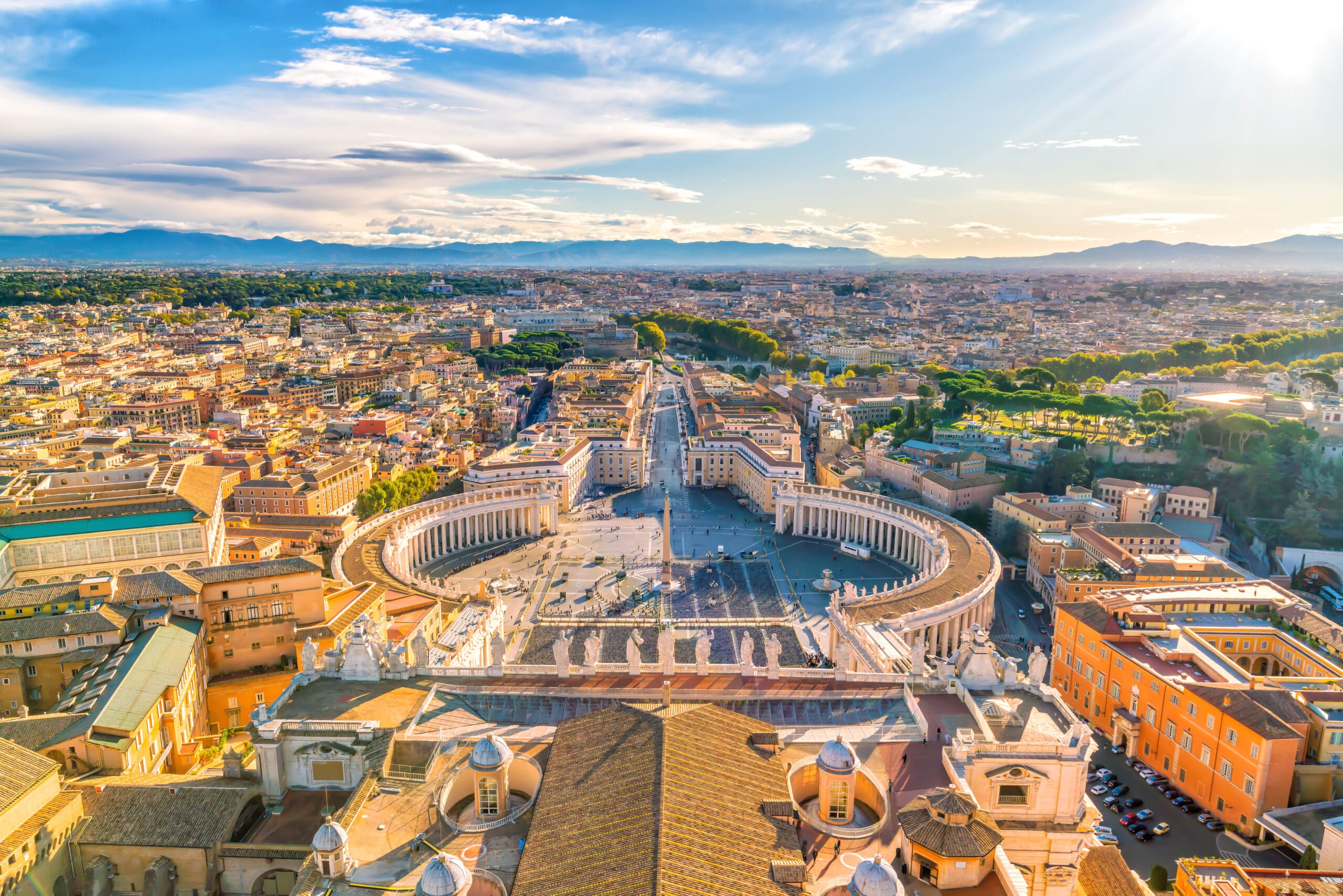
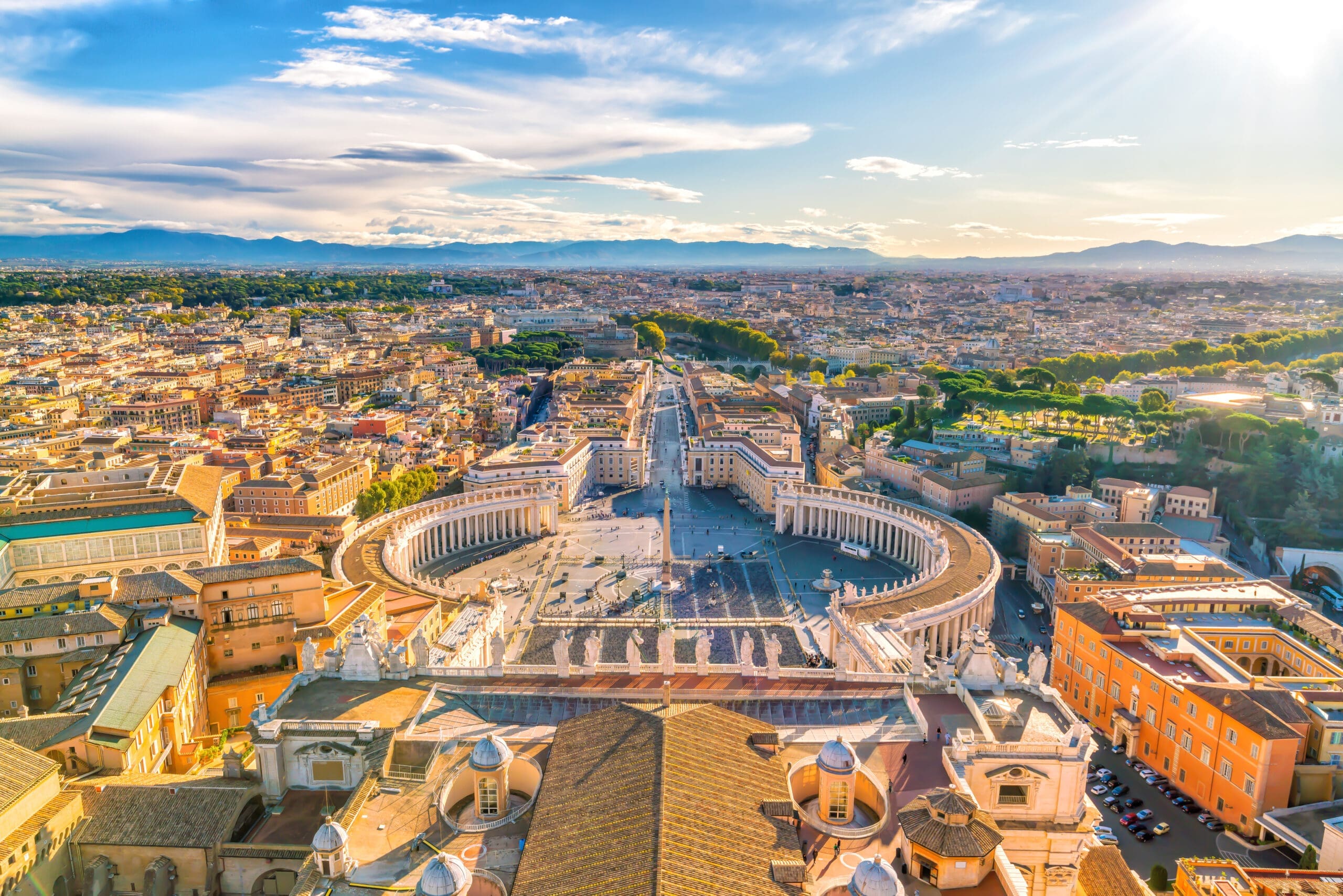
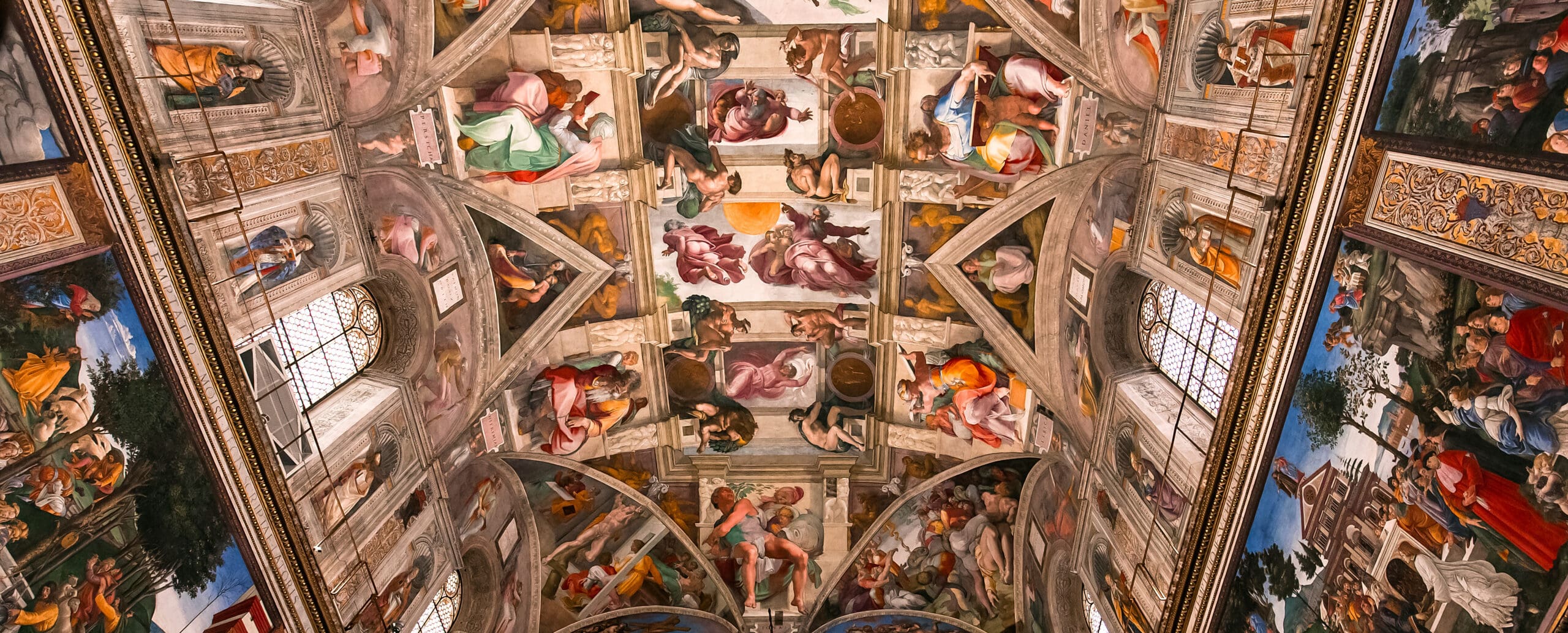
The Wednesday audience in the square, then the basilica itself — the Pietà, the Bernini baldachin, the tombs of the popes — and the Vatican Museums and Sistine Chapel in the afternoon.
St. Clement is three churches stacked in one excavation: a twelfth-century basilica over a fourth-century church over a first-century Roman house. Santi Giovanni e Paolo, built in 398, is the mother church of the Passionists and the burial place of St. Paul of the Cross. Mass here.
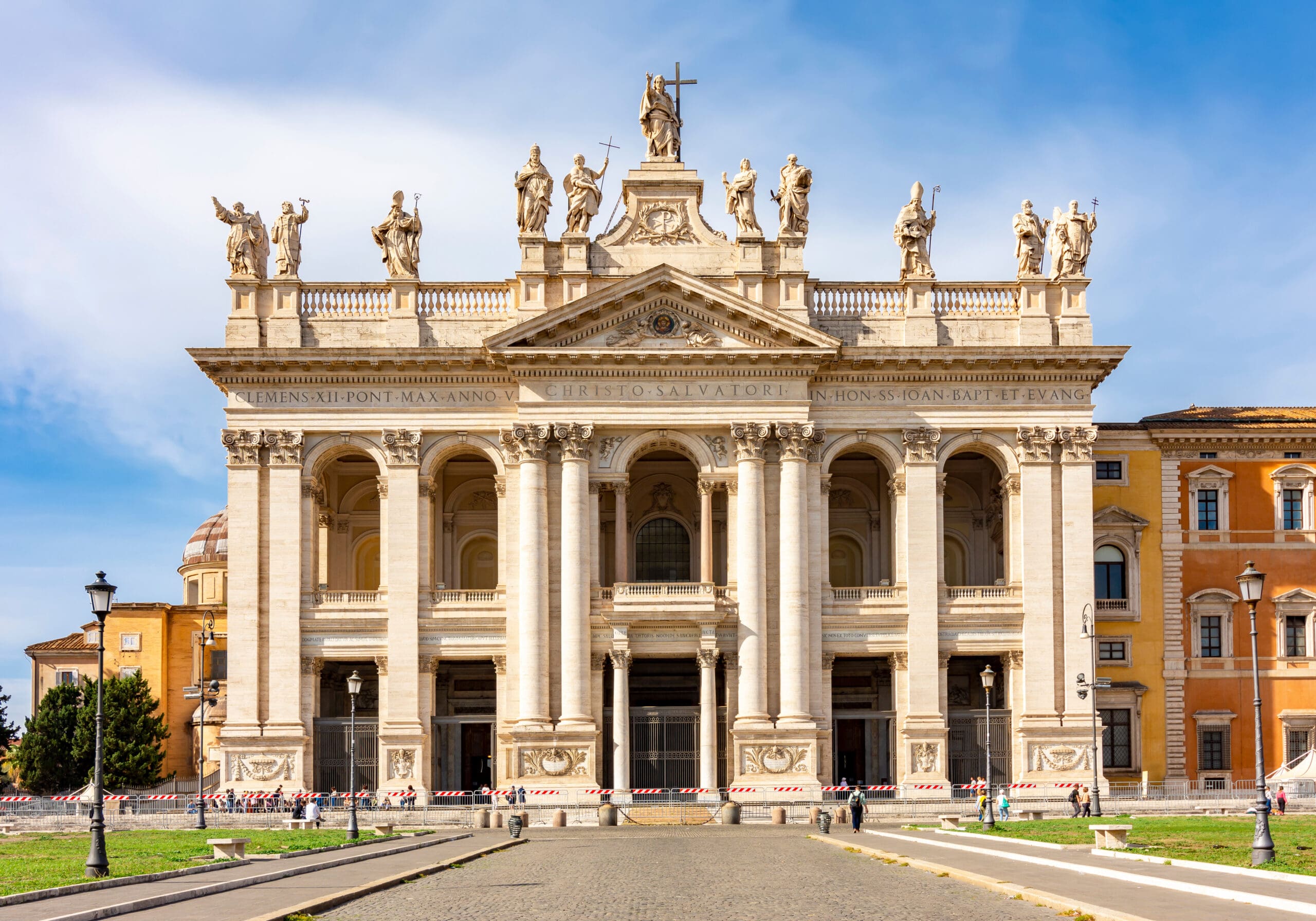
The cathedral of the Bishop of Rome, and opposite it the twenty-eight marble steps venerated as those Christ climbed before Pilate.
Fifth-century mosaics and the tomb of Pope Francis at St. Mary Major; the tomb of the Apostle Paul, under a canopy in the largest basilica in Rome after St. Peter’s, at St. Paul Outside the Walls.
Day by day, as we operate it. Your group travels on its own dates, and the itinerary can be shortened or extended around the shrines that matter most.
This route runs largely as a private group pilgrimage. Tell us your window, your group size and whether you want to be at San Giovanni Rotondo for the feast of Padre Pio on 23 September.
These inclusions can be easily tailored to the individual needs of your group
Every pilgrim in your group gets the app. Their itinerary, hotels and flights, the prayers of the day and a way to reach one another — in one place, and kept current as the pilgrimage unfolds.
Your whole group in one thread, so a change of plan reaches everyone at once.
The full day-by-day schedule, always current, in every pilgrim’s pocket.
Where the group is staying each night, with addresses and dates.
Flight details kept alongside everything else, not in a separate email.
The prayers of the day, including the Liturgy of the Hours.
A keepsake record of the shrines your group visits along the way.
Times and meeting points pushed to everyone the moment they change.
Published prices, deposits, group sizes and lead times — the numbers every group leader asks for first.
Our fifteen published Italy departures for 2026 to 2028 run from $4,395 to $6,850 per pilgrim, and the six ten-day departures currently on sale run $4,395 to $5,399. Length is the biggest driver, then your departure city and the time of year. A private group travelling on its own dates is priced individually — tell us your target per-person figure and we will build the itinerary to it rather than the other way round.
Four-star hotels, private motorcoach throughout, breakfast and dinner daily with wine at some dinners, a dedicated tour manager with your group from arrival to departure, licensed local Catholic guides and all admission fees, porterage at hotels, whisper headsets while touring, tips for hotel and restaurant staff, daily Mass booked in advance, the Canterbury mobile app, reservation support 9–5 ET and 24/7 emergency support while you are abroad.
Every published departure is priced from a named US gateway — the departure city is on each card — and we hold the group air contracts rather than leaving your pilgrims to book their own flights. Ask a consultant what the quoted price covers for the specific departure you are looking at, and we will put it in writing before you announce anything to your group.
Most of our groups run between 20 and 50 pilgrims. We arrange smaller tours as well, and at the other end we have organised pilgrimages for groups as large as 2,500 — so whatever size your group turns out to be, we can build for it.
Each pilgrim pays a $450 deposit when they register, of which $200 is non-refundable, and the balance 90 days before departure. Major events such as a beatification or World Youth Day sometimes run on a different schedule. No money moves through the parish — every pilgrim books and pays us directly, so you never hold a deposit or chase a balance.
Yes. Your place is earned by the group you bring and it comes from our suppliers rather than out of what your pilgrims pay. There is no deposit or financial guarantee from you, and if the group does not reach its minimum, final payments are never collected and deposits are returned. A fundraising amount can also be built into the price and returned to your parish.
Most groups start eight to thirteen months out, and waiting is the most common mistake we see. Registration normally closes 90 days before departure; if space remains, later registration is sometimes still possible, so it is worth asking rather than assuming.
April to early June and September to October give the most comfortable weather across both Umbria and Puglia. The one date that changes everything is 23 September, the feast of St. Padre Pio, when San Giovanni Rotondo is at its fullest — worth deciding early whether you want to be in that crowd or avoid it. The Papal Audience in Rome is on Wednesday mornings when the Holy Father is in the city.
Yes, and on this route most do. Tell us your window and we build it around you, including whether you want to be at San Giovanni Rotondo for the feast.
It covers far more ground. The classic route uses two hotels; this one moves through Assisi, the Adriatic coast at Loreto, the Umbrian mountains at Cascia, the Abruzzo coast at Lanciano, Puglia at San Giovanni Rotondo, then Montecassino and Rome. If your parish has a devotion to Padre Pio, to the Eucharist or to Our Lady, this is the itinerary that puts your pilgrims in front of it.
The oldest of the recorded Eucharistic miracles, dated by tradition to the eighth century, in which the host and wine at Mass are said to have become flesh and blood. The relics are kept and displayed at the church in Lanciano and can be venerated.
Yes. His body rests at the Church of Santa Maria delle Grazie in San Giovanni Rotondo, alongside the older friary church where he heard confessions for decades and the modern Padre Pio Pilgrimage Church. We celebrate Mass here. September 23 is his feast, and the town is at its fullest around it — worth deciding early whether you want that crowd or want to avoid it.
The Basilica della Santa Casa encloses three stone walls venerated as the house of the Holy Family at Nazareth, where tradition holds the Annunciation took place. It is one of the oldest and most visited Marian shrines in Italy and has been a pilgrimage destination since the thirteenth century.
Enough to reach shrines most itineraries never get to, and we plan the days around it. The longest single day is day five, which crosses from Assisi through Cascia and Lanciano to San Giovanni Rotondo. We break it with Mass at Cascia and lunch, and we do not schedule anything demanding on the evening it ends.
Parishes and communities with a devotion to Padre Pio, Eucharistic and Adoration groups, Marian sodalities, and any parish that would rather pray at the shrines behind the devotion than drive past them. First-time groups travel it happily too — Assisi, the Vatican and the papal basilicas are all on the route.
A pilgrimage consultant replies within one business day. No deposit or commitment.